

LinkedIn throttles the reach of AI-generated filler in its feed. Posts that look like a language model wrote them with minimal human input don't surface in other users' recommendations. When the policy was announced, Engadget reported that engagement bait, recycled self-promotion, and generic content that lacks authenticity and originality were all in the crosshairs. The platform went after the giveaway phrases too, including the "it's not X, it's Y" construction that has become an unmistakable AI tell.
A lot of LinkedIn creators panicked. They shouldn't have. If you're doing real thought leadership, that enforcement works in your favor.
The slop was always the real problem
I've watched executives, founders, and board candidates pour their energy into LinkedIn content that was working against them. These are capable writers. The problem is that they handed the thinking to a chatbot and then wondered why nothing was happening.
You probably know the pattern. Someone in your network has been posting daily for six months. The posts are polished, with the line breaks in the right places. They open with a hook and close with a question.
And you can't remember a single thing any of them actually said.
That's the lowest common denominator problem, and it predates LinkedIn's enforcement by years. The platform caught up to what serious readers were already doing in their heads: tuning out.
The numbers tell the story. Ahrefs reported in 2025 that 74.2 percent of new web pages contain detectable AI content, and that more than half of longer English-language LinkedIn posts are likely AI-generated. Edelman's 2025 research puts trust in AI-created content at 42 percent, against 68 percent for human-authored material. Per the 2024 Edelman-LinkedIn B2B Thought Leadership Impact Report, only 15 percent of decision makers rate the thought leadership they consume as very good or excellent, while 90 percent of those same buyers say they're more receptive to companies that produce it well.
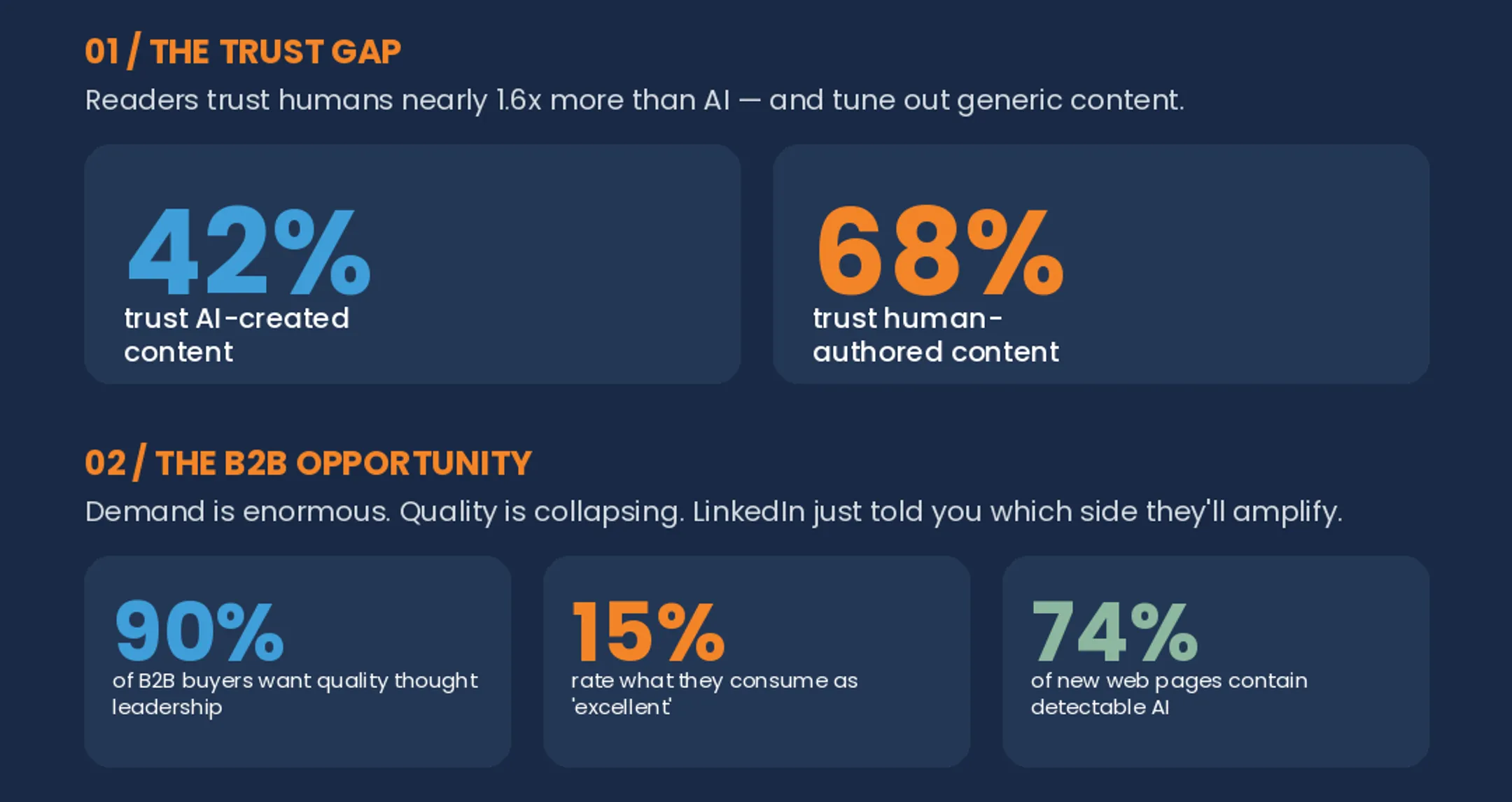
That gap is the entire opportunity. Demand is enormous. Quality is collapsing… and LinkedIn told you which side of that line it's going to amplify.
LinkedIn narrowed the exemption
The announcement was careful to say that AI-assisted content is still welcome, as long as it contains original ideas or sparks meaningful conversation. That exemption is narrower than it sounds. LinkedIn's engineers worked with their editorial team to identify the patterns that separate content adding perspective, context, or expertise from content that repeats existing ideas without contributing anything new.
Translated: if your post could have been written by any of your competitors, with no changes, LinkedIn won't push it to people outside your direct network. Your immediate connections may still see it. Strangers won't.
For most LinkedIn creators, this is a problem. Their entire model has been to use AI to generate volume and hope the algorithm rewarded effort. That model is dead.
For experts with a real point of view, this is a windfall. The signal-to-noise ratio in your audience's feed improved. The cost of producing filler went up sharply, because filler no longer reaches anyone outside your connection list.
The bottleneck moved from production to differentiation
The most important thing to understand about thought leadership right now is that the bottleneck has moved. Production used to be the constraint. AI removed it. Producing thought leadership content is now trivially easy.
The hard problem is producing content that's genuinely different from what your competitors and the AI tools can generate.
So what does the path look like? Original, valuable ideas built on your lived experience, organized around a problem you want to be known for solving.
Three things have to line up.
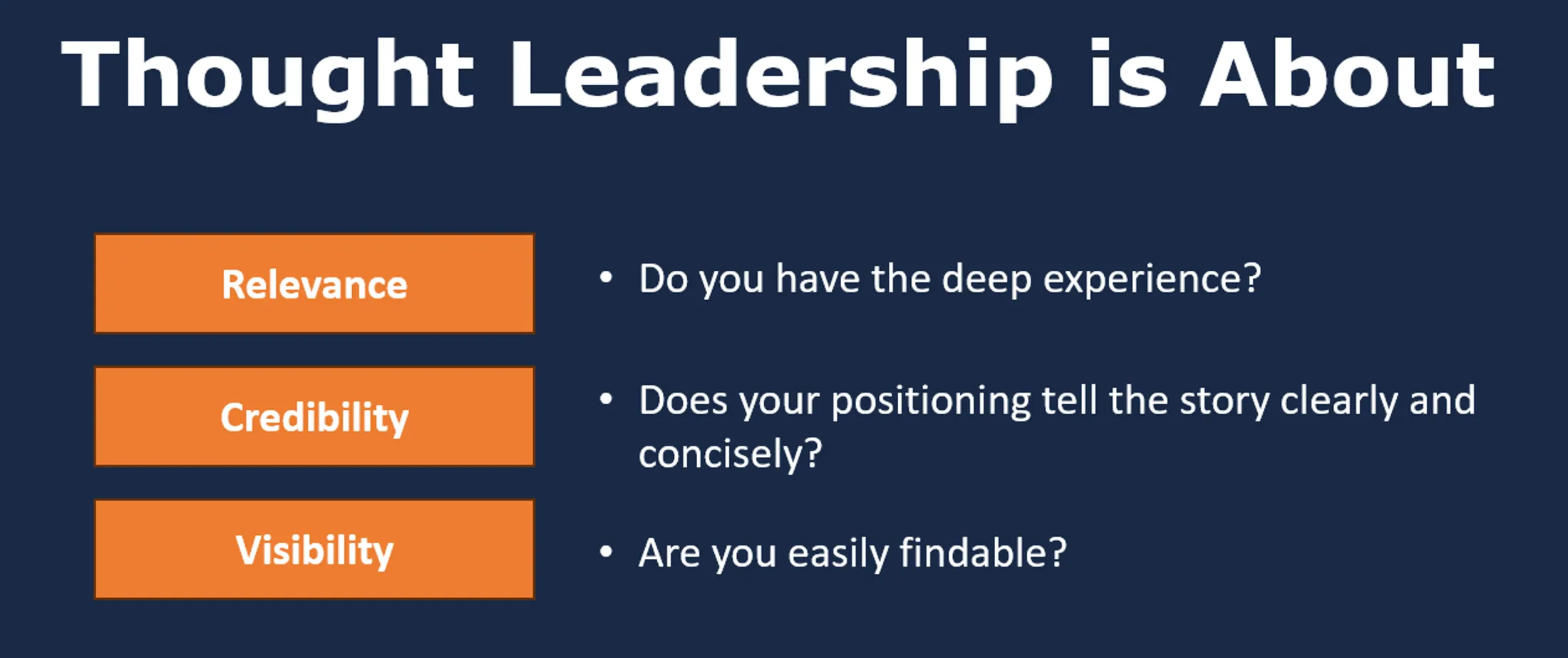
Relevance.
Do you have deep industry experience that's actually current? The world is moving fast, and what you knew 20 years ago isn't enough on its own. Pattern recognition from decades of work is still gold, but only if you can connect it to what your industry is wrestling with right now. This is Ground Truth: the operating reality inside an industry that people who've lived it understand and that outside consultants routinely miss.
Credibility.
Does your positioning tell the story clearly and concisely? Most senior professionals have a visibility problem with their expertise rather than an expertise problem. They know the answer to their industry's hardest questions, and you'd never guess it from reading their LinkedIn profile or any of their posts.
Visibility.
Are you easy to find? Is your target audience actually seeing what you produce? And are you findable to the AI systems that are increasingly the first stop in any research process? 6Sense reported in 2025 that 94 percent of B2B buyers use LLMs during their purchasing process. LinkedIn is among the most heavily cited sources in AI-generated answers for professional content, and one analysis from Meltwater found that 51 percent of AI citations come from profiles with under 10,000 followers.
Being cited has less to do with your follower count than with whether you've published something nobody else has. If you're not publishing original thinking, you're not in the conversation.
Build the framework before you build the calendar
When we work with senior executives and board candidates on this, we run the Authority Sprint. Four stages: capture, structure, create, launch. It survives changes like LinkedIn's because it was never built around volume in the first place.
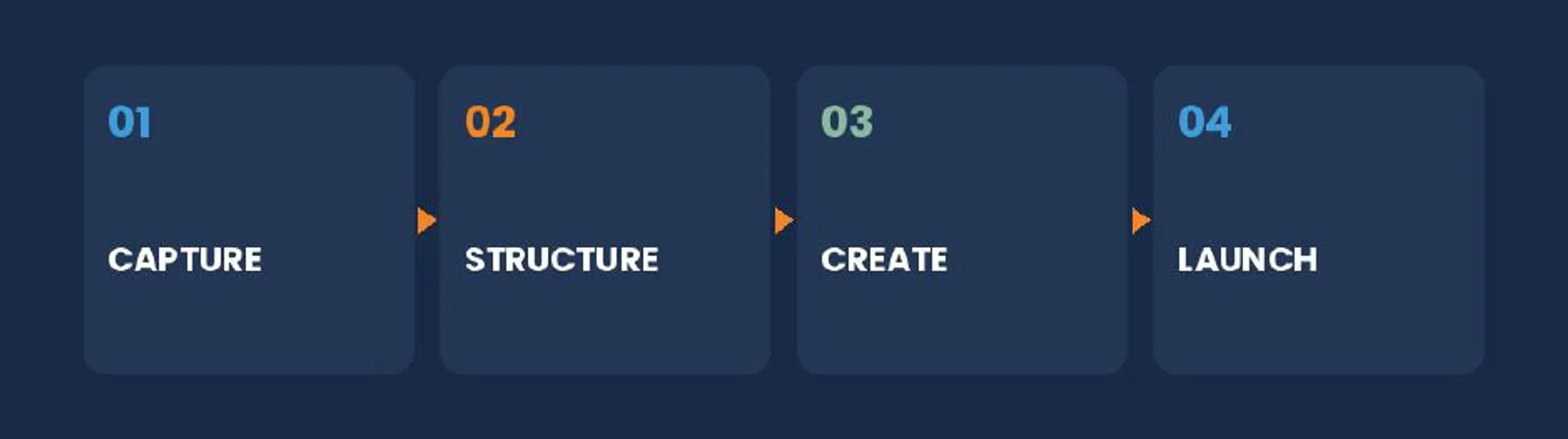
Capture.
Map the industry landscape before you map your own expertise. What are the most costly problems? Where are the recurring tensions? What's changing right now that's reshaping the market? And which well-worn assumptions no longer hold up? AI can do deep research in 20 minutes that used to take days, which helps you find the territory where your point of view will matter. Your point of view still has to come from you.
Structure.
Turn your expertise into a signature framework. Something clear enough to remember and useful enough to apply. One of our clients, a senior HR leader I'll call Matt, distilled three decades of manufacturing HR experience into a named talent model, simple enough to draw on a napkin and specific enough to answer a question CHROs are asking right now. Within six weeks of publishing, his content reached over 10,000 impressions, and his framework started showing up in AI answers when people searched for related topics. He went from invisible to findable, for humans and machines both.
Create.
Use AI to expand and organize your ideas rather than to replace your thinking. The cornerstone article that explains your framework. Then 90 days of supporting posts that reinforce it from different angles. AI edits, formats, and brainstorms. You're still the source.
Launch.
Most people skip past this one. Publish with consistency. Engage with the influential voices in your space. Boost the posts that matter so they reach beyond your immediate network. With LinkedIn suppressing slop, your reach math is better than it used to be, because the garbage is being pulled out of the feed your audience scrolls through.
There's a stage past launch that most people never reach. Your framework has to become something a buyer can hire: a diagnostic, a retainer, a workshop. Otherwise it stays an article people admire. Authority becomes framework. Framework becomes engagement. Engagement becomes a position in the portfolio.
Ignore conventional wisdom
There's a phrase I genuinely can't stand when it comes to being successful in your industry: "It's all about who you know."
I disagree completely.
I'm here to tell you, it's not all about who you know. It's about who knows you.
The reason matters. You can have the best network in your industry, and it'll still be limited by the size of that network. The boards you'd want to serve on, the clients you'd want to work with, or the partnerships you'd want to build: most of those people aren't in your network yet. They're out there researching, and increasingly that research starts with a search engine or an AI tool and lands on a LinkedIn profile.
If what they find is more slop, you lose.
If what they find is a clear point of view, a real framework, or evidence that you've been thinking seriously about the problem they're trying to solve, you win.
LinkedIn's enforcement is on your side here. Every AI-generated post the platform buries is one fewer competitor for the attention of the person who needs what you know.
What to do this week
If you've been posting AI-drafted content with minimal personal input, stop. The platform will bury it, and your audience was already discounting it.
If you've been hesitant to publish because you weren't sure your perspective was unique enough, that hesitation was imposter syndrome talking. Your perspective, built on decades of real work, is exactly what's now scarce. The market is paying a premium for it precisely because AI can't produce it.
If you've been on the sidelines without a framework, that's the real work to do. One clear framework that names the problem you solve, your perspective on it, and the path forward. Then the engagement shape that makes it hireable. Everything else follows from those two.
And if your strategy has been to win on volume, the rules have changed on you. What gets rewarded now is originality, evidence, lived experience, and a clear stance. Which is to say, thought leadership as it was always supposed to be done.
It's sage advice. It always was. What changed is that LinkedIn will now reward you for taking it.
What's the problem you'd want to be known for solving in your industry?